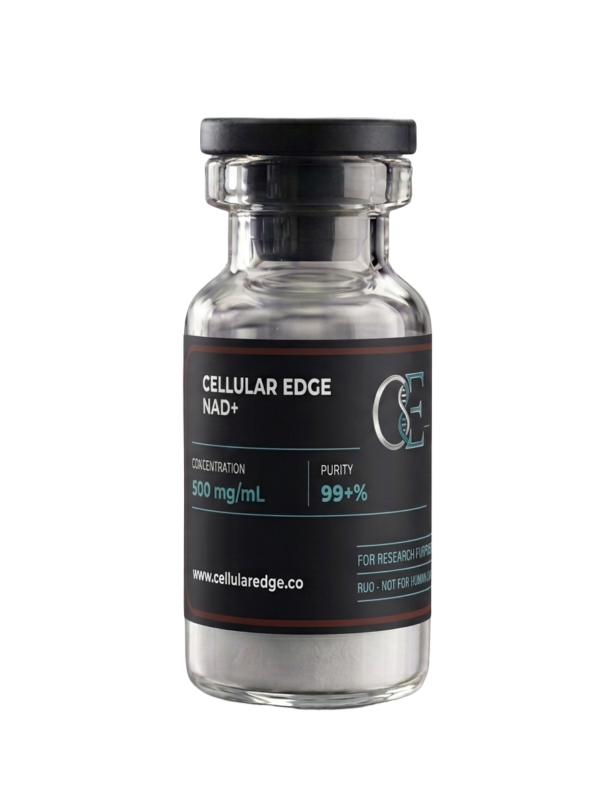
NAD+
Description:
NAD stands for nicotinamide adenine dinucleotide. It’s a tiny molecule found in every cell in your body. NAD helps your cells make energy by carrying electrons from one chemical reaction to another. This process powers nearly everything your body does, and it keeps your cells working properly as you get older.
The molecule your cells use for energy metabolism (it’s a critical cofactor in mitochondrial ATP production) and for enzymes like sirtuins and PARPs involved in DNA repair and stress response. NAD+ levels decline with age, which is the basis for most of the longevity usage.
By the time you reach age 50, your natural NAD+ levels drop to roughly 50% of what they were in your youth (and can drop up to 80% by age 80). This decline occurs because:
- Higher Consumption: Inflammatory enzymes (like CD38) and DNA-repair enzymes (like PARPs) consume more NAD+ as age-related damage accumulates.
- Decreased Recycling: The body’s salvage pathway (NAMPT), which recycles used NAD+, becomes less efficient over time.
When NAD+ plummets, mitochondrial function slows down, cellular repair halts, and you experience systemic energy drop-offs, brain fog, and slower physical recovery.
Benefits:
- Mental Clarity and Cognitive Protection
Because the brain consumes roughly 20% of the body’s total energy, it is extremely sensitive to NAD+ drops.
- Clears “Brain Fog”: Replenishing NAD+ restores mitochondrial output in neurons, improving mental processing speed, alertness, and focus.
- Neuroprotection: It activates SIRT3 inside brain cell mitochondria, protecting neurons against oxidative stress, neuroinflammation, and age-related neurodegenerative decline.
- Sustained Physical Energy and Muscle Recovery
Unlike stimulants (like caffeine) that simply mask fatigue by blocking adenosine receptors, NAD+ increases actual cellular work capacity.
- Higher ATP Output: It optimizes the mitochondrial electron transport chain, giving muscle cells more usable energy for exercise and daily activity.
- Mitigates Exercise Fatigue: It enhances SIRT1 activity, which stimulates mitochondrial biogenesis—literally signaling your body to build more (and younger) mitochondria in skeletal muscle tissue.
- Metabolic Optimization & Insulin Sensitivity
NAD+ plays a pivotal role in maintaining metabolic flexibility—your body’s ability to seamlessly switch between burning carbs and burning fat for fuel.
- Lipid and Glucose Control: Elevated NAD+ activates sirtuins that suppress fat accumulation in the liver, lower circulating triglycerides, and improve peripheral insulin sensitivity.
- Synergy with MOTS-c: While MOTS-c stimulates the AMPK pathway to pull glucose into muscles, NAD+ provides the raw coenzyme substrate needed to convert that glucose into ATP once inside.
- Accelerated DNA Repair and Cellular Resilience
Every single day, your DNA suffers thousands of micro-damages from UV exposure, metabolic stress, and environmental toxins.
- PARP Activation: PARP1 enzymes are your body’s primary DNA mechanics, but every time they fix a single-strand break, they consume a massive amount of NAD+. Keeping NAD+ levels high ensures these repair enzymes never run out of fuel.
- Reduces Senescence: Proper DNA maintenance prevents cells from becoming “zombie” (senescent) cells that spew inflammatory cytokines into surrounding healthy tissue.
- Circadian Rhythm Regulation
NAD+ and sirtuins control the molecular clock genes (CLOCK and BMAL1) that govern your internal 24-hour sleep-wake cycle.
- Restoring youthful NAD+ levels helps anchor natural circadian rhythms, making it easier to fall into deep, restorative slow-wave sleep and wake up refreshed.