Longevity

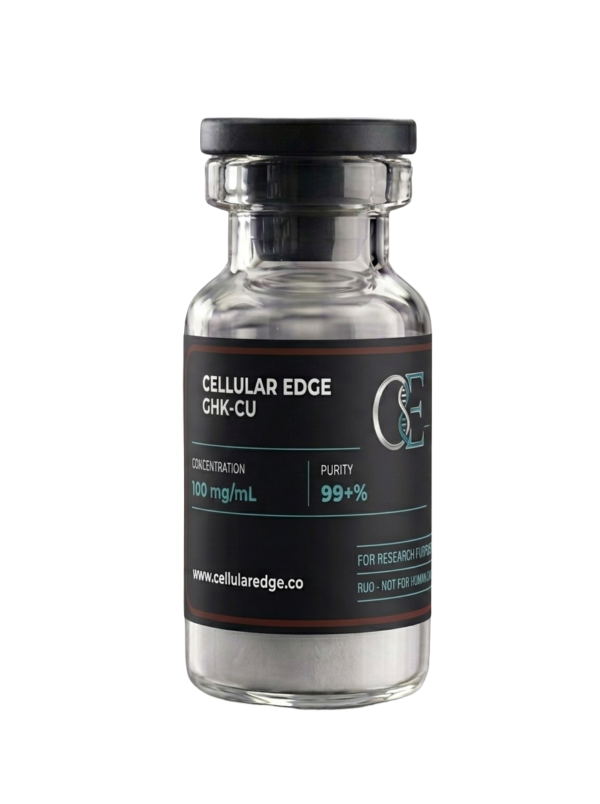
GHK – CU COPPER
Description:
GHK-Cu (glycyl-L-histidyl-L-lysine bound to a copper ion) is a naturally occurring peptide
found in human plasma, saliva, and urine. Known as a "restoration" peptide, it acts as a cell
signaling molecule, triggering tissue repair, collagen production, and hair follicle growth. Natural
levels of GHK-Cu in the body decline by up to 60% by age 60. GHK-Cu is a naturally occurring
copper-binding tripeptide — three amino acids (Gly-His-Lys) that has a strong, specific affinity
for copper(II) ions, forming the complex GHK-Cu.
Discovered in 1973 by Dr. Loren Pickart, GHK-Cu is best known as the "master remodeling
peptide." It is widely used in both topical skincare formulations and research protocols for
dermal regeneration, hair growth, wound healing, and gene expression.
Benefits:
1. Copper Delivery & Enzymatic Activation
Copper is an essential trace element required for fundamental biological processes, but free
copper ions can cause oxidative stress. GHK acts as a safe, highly targeted carrier that delivers
copper directly into cells. Once delivered, the copper activates key enzymes, such as:
Lysyl oxidase (LOX): Crucial for cross-linking collagen and elastin fibers, restoring
structural firmness to skin and blood vessels.
Superoxide dismutase (SOD): A major intracellular antioxidant enzyme that neutralizes
tissue-damaging free radicals.
2. Extracellular Matrix (ECM) Remodeling
Unlike compounds that simply stimulate collagen blindly, GHK-Cu regulates tissue remodeling
by managing both the synthesis and breakdown of structural proteins.
Collagen & Elastin Synthesis: It stimulates the production of Type I and Type III
collagen, elastin, and glycosaminoglycans (like hyaluronic acid).
Metalloproteinase Regulation: It balances matrix metalloproteinases (MMPs) and their
inhibitors (TIMPs). This prevents excessive scar tissue formation while clearing away
damaged collagen matrix components so fresh, healthy tissue can take its place.
3. Hair Follicle Stimulation
GHK-Cu is heavily researched for androgenetic alopecia and hair thinning. It increases the
physical size of hair follicles, expands the vascular bed around the follicle root, and prolongs the
anagen (growth) phase of the hair growth cycle.
4. Broad-Spectrum Gene Regulation
Genome-wide profiling reveals that GHK-Cu modulates the expression of over 4,000 human
genes (roughly 31% of the human genome). It upregulates genes associated with DNA repair,
antioxidant defense, and tissue regeneration while downregulating genes linked to chronic
inflammation and cellular senescence.